
Thalassemia Treatment in India
What is Thalassemia?
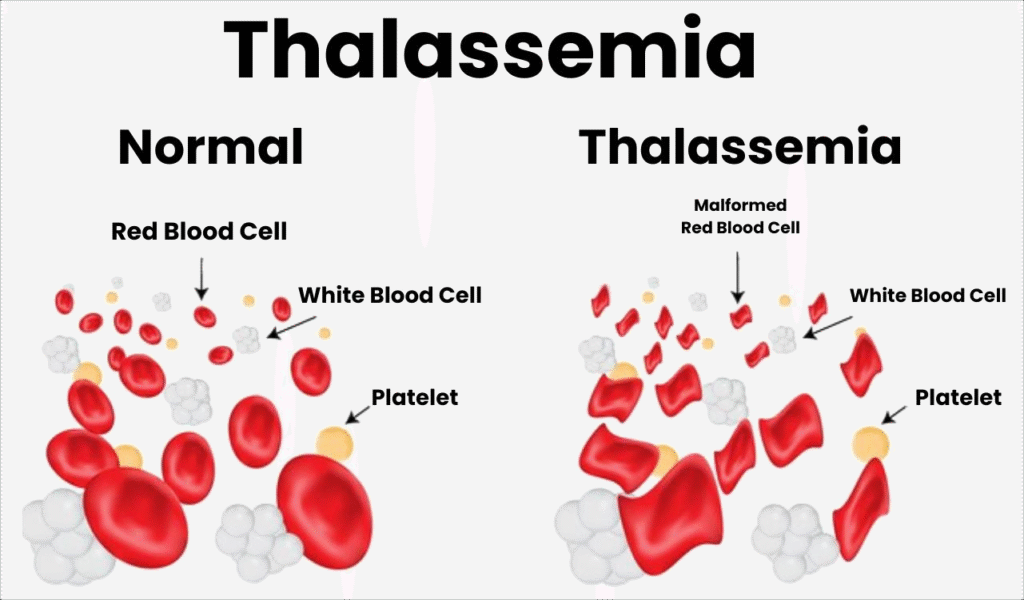
Thalassemia is a genetic blood disorder that impacts the body’s capacity to make healthy hemoglobin — an essential protein in red blood cells that transports oxygen throughout the body. Thalassemia results in anemia, tiredness, and problems like bone deformities, growth retardation, and damage to organs if not treated. Thalassemia, although existing from birth and needing lifetime care, has seen India rise as a thalassemia treatment hub that is worldwide in reach and relatively inexpensive.
India has seen considerable progress over the years in the treatment of thalassemia — providing top-of-the-line medical care, cutting-edge diagnostic centres, and both supportive and curative treatment methods. Mild cases of thalassemia might not even need frequent intervention; however, in severe instances, regular transfusions of blood are needed in order to maintain normal hemoglobin levels. Such long-term transfusions can also cause iron overload, which involves the use of specialized chelation therapy to remove iron.
Signs and Symptoms of Thalassemia
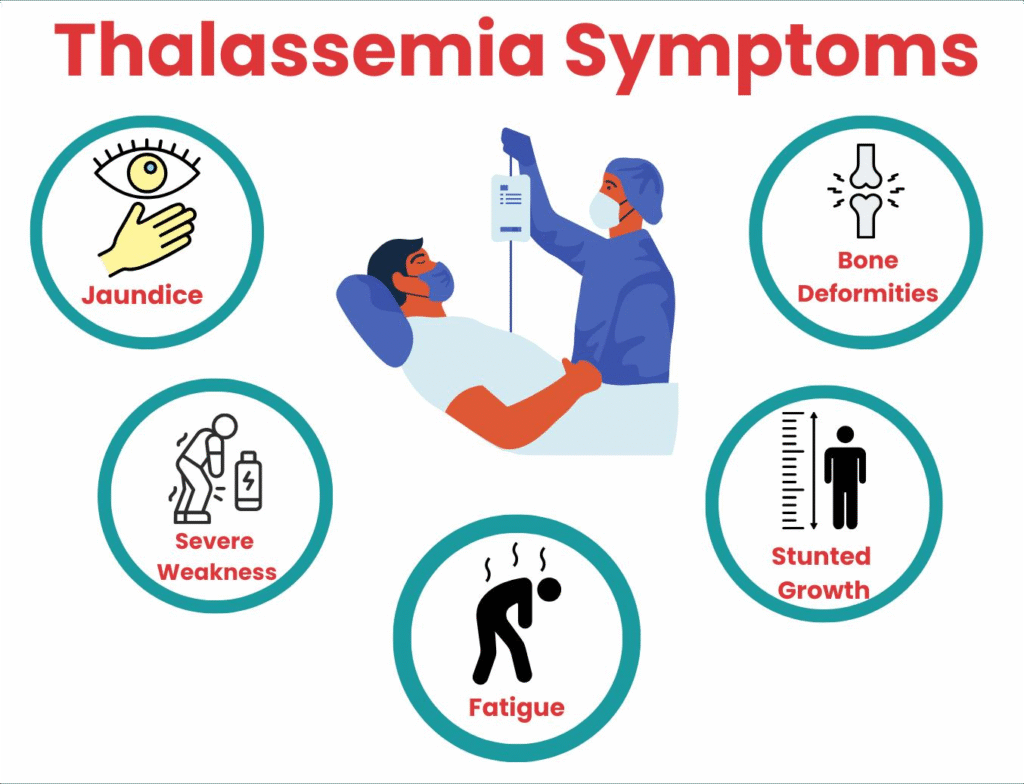
Symptoms of thalassemia may be very different depending on the type of thalassemia (alpha or beta) and how severe the condition is. Some people might have no symptoms or only mild symptoms, while others — particularly those with severe thalassemia — might develop obvious health problems early in life.
Common Symptoms of Thalassemia Include:
- Chronic fatigue and weakness
- Pale or yellowish complexion (jaundice)
- Deformities of facial bones (particularly in the cheeks and forehead)
- Abdominal distension (caused by enlarged liver or spleen)
- Dark-colored urine
- Slow or delayed development and growth in children
- Shortness of breath
- Increased risk of infections
In other situations, thalassemia symptoms become apparent at birth. Yet in other children, however, the manifestations of the illness usually appear before age two. Those who carry one affected gene for hemoglobin (thalassemia trait or minor) tend not to present any notable symptoms and, for the most part, they may live as usual without necessarily being treated.
Treatment Options for Thalassemia in India
The management of thalassemia is highly based on the severity and type of the disease. Mild thalassemia can go without any treatment, but moderate and severe thalassemia requires a well-planned management process to enable patients to have a more improved quality of life.
Mild Thalassemia
People with mild thalassemia (thalassemia minor) usually do not need active treatment. They might only require routine monitoring and supportive therapy such as folic acid supplements to ensure healthy red blood cell production.
Moderate to Severe Thalassemia Treatment
For individuals diagnosed with moderate to severe thalassemia, particularly thalassemia major, the following treatments are typically prescribed:
1. Routine Blood Transfusions
Life-saving for individuals with severe thalassemia.Aids in the maintenance of normal hemoglobin levels and control of symptoms such as anemia and fatigue.
However, transfusions repeated too often can cause iron overload, which can destroy important organs such as the heart, liver, and endocrine glands.
2. Iron Chelation Therapy
To control iron overload due to repeated transfusions, iron chelation therapy is necessary. This therapy removes excess iron from the body.
Common Chelating Agents:
- Deferasirox (Exjade, Jadenu) — Oral drug.
- Deferiprone (Ferriprox) — Oral drug.
- Deferoxamine (Desferal) — Injected drug.
3. Folic Acid (Vitamin B) Supplementation
Anemia patients are usually given folic acid to help in red blood cell production, often with other medications.
4.Bone Marrow Transplant (BMT) — A Curative Treatment for Thalassemia
In case of thalassemia, Bone Marrow Transplant (also Stem Cell Transplant) is, at present, the sole curative therapy. This therapy involves substituting the faulty bone marrow (responsible for the formation of abnormal blood cells) with normal stem cells from a donor who matches.
Types of Bone Marrow Transplant:
- Autologous Transplant: Employing the stem cells of the patient himself.
- Allogeneic Transplant: Employing stem cells of a matched sibling or unrelated donor following HLA matching.
Advantages of Bone Marrow Transplant in Thalassemia:
- Scope for total cure.
- Restoration of normal hemoglobin production.
- Much better quality of life in the patient.

To know more about Bone Marrow Transplant Treatment in India – Visit our specialized BMT page.
Cost of Bone Marrow Transplant in India
The price of a bone marrow transplant in India depends heavily on many variables. Most often, the patients can expect to pay anywhere between INR 15 lakhs and INR 40 lakhs. The broad difference often lies in the nature of the transplant that is needed—autologous or allogeneic.
Hospital facilities, doctor skills, and patient requirements are factors that affect the price. The best hospitals can be more expensive because of better technology and skilled personnel. Pre-transplant testing and post-operative care also add to the cost.
Insurance coverage is also a significant factor. Most Indian insurance policies pay for part of these procedures but verifying individual terms is essential for budgeting.
Patients should also factor in concealed expenses such as drugs, blood work, and lodging if coming from outside their city. Thorough research assists in setting expectations about the cost involved in this life-saving treatment.
Success Rates and Risks of Bone Marrow Transplant in India
The bone marrow transplant success rate in India has increased up to 90%with the improved skills of the surgeons.
India’s health infrastructure has attracted international acclaim for providing world-class medical treatment at a mere fraction of the costs of Western nations. Our highly advanced hospitals lead this revolution, especially in complex transplant surgeries.
The success rate of bone marrow transplant in india is due to the Our hospitals features like:
- Robotic and Minimally Invasive Surgery Units – Precision, faster recovery, and fewer complications.
- JCI & NABH Accreditation – Ensuring international healthcare standards.
- Dedicated Transplant ICUs – Specialized postoperative monitoring for better recovery.
- Experienced Transplant Teams – Well-trained surgeons from world-class international medical schools.
- Comprehensive Pre- and Post-Transplant Care – Tailored patient management for successful long-term outcomes.
Patient Experiences and Testimonials
Patient testimonials and experiences can give insights into the process of having a bone marrow transplant in India. Patients have come forward with accounts of hope, courage, and thankfulness for the care that they received.
People tend to emphasize the skill of physicians who specialize in this area. The top doctor for bone marrow transplant in India can be a game-changer. Patients value detailed consultations that explain each step of the procedure. They discuss how comforting it is to have access to the best medical experts who walk them through their care.
The psychological side cannot be ignored either. Families speak about how important the emotional support was during such a difficult period. Most hospitals have counseling services or support groups available that make the patients feel less alone during their ordeal.
Rates of success also have an important influence on patient attitudes. The high success rate of bone marrow transplants in India gives a lot of confidence to patients thinking of this life-saving